There’s a smell to waiting rooms. I noticed it because I haven’t smelled it in a while. Cleaning product, old magazines, the slight tang of other people’s anxiety.
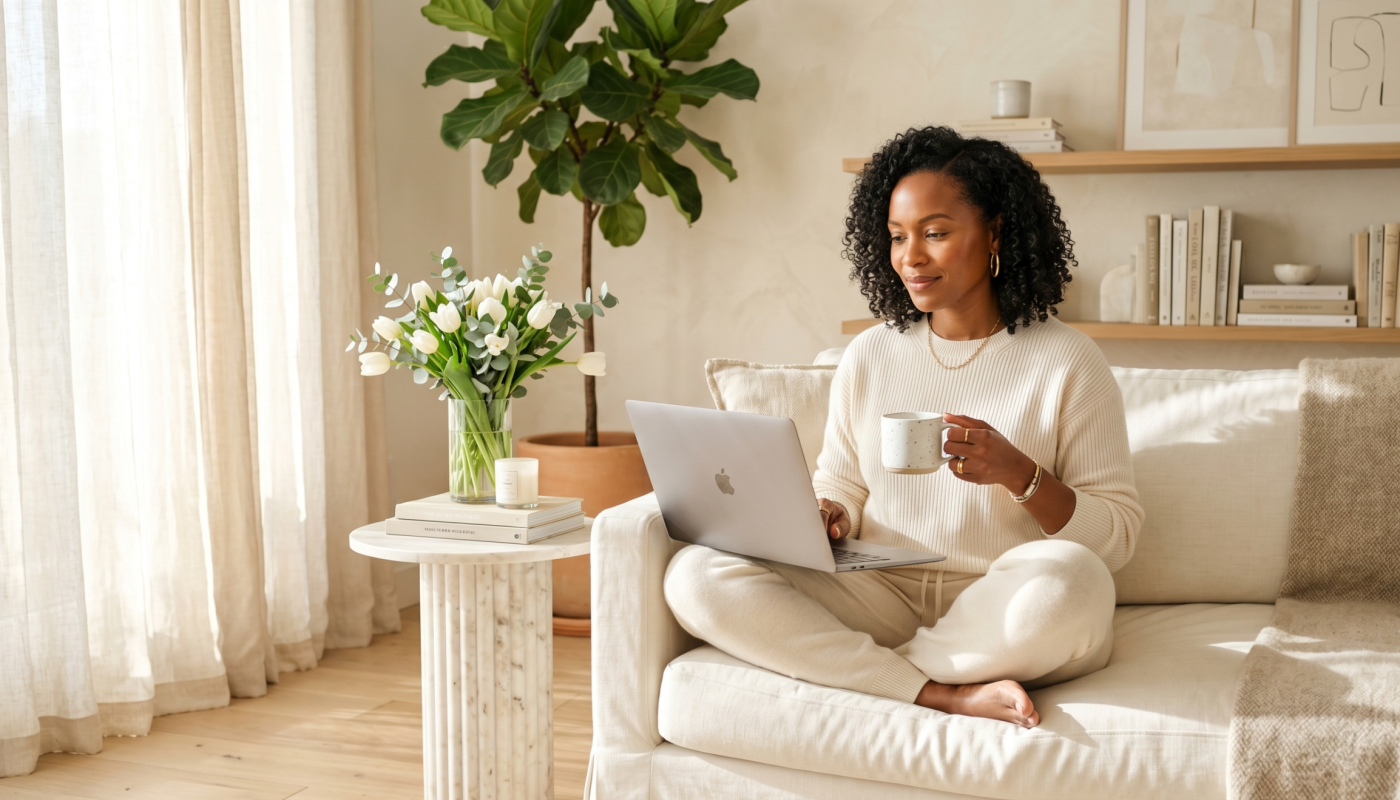
The first time I logged into a doctor’s appointment from my own couch, in a sweatshirt, with my dog asleep on my feet, I started laughing. Out loud. By myself.
I’ve been managing my GLP-1 care entirely online for about eight months. The whole thing. Consultations, follow-ups, prescription renewals, questions I would have been too embarrassed to ask in person. All of it happens from my couch or my kitchen table. And I cannot believe how much of my life this has given me back.
How much of my life was getting eaten by appointments
I didn’t realize until I added it up. Drive there. Park. Walk to the building. Elevator. Sign in. Wait. Get called back. Wait again. Vitals. Wait some more. Actually see the doctor for, what, eleven minutes. Reverse the whole process. Drive home.
Three hours, easily. For an interaction that could have been a phone call. And I had been doing some version of this for years, paying for it in unpaid time off work, in tired evenings, in pizza for dinner because I had no energy left to cook.
GLP-1 in particular requires regular check-ins. Dose adjustments. Side effect monitoring. If I were doing all of that in person, it would have been an entire workday a month, easily. The telehealth version takes me about twenty minutes from the moment I open the laptop to the moment I close it. That’s not a small difference. That’s the difference between sustainable and not sustainable for someone with a job.
The privacy thing I didn’t know I needed
Here’s the part I’m a little embarrassed to admit. I avoided certain conversations with my doctor for years because I didn’t want to have them in a paper gown.
Weight stuff in particular. There’s something about being weighed in a hallway, by someone with a clipboard, while you’re holding your purse and trying to look like you don’t care. That doesn’t make for great conversations. I would smile, nod, take the lecture, and never bring up what I actually wanted to bring up.
From my couch, it’s different. I can ask. I can use the actual words. I can say, I’ve been thinking about GLP-1 for two years and I’m scared, and the doctor can talk to me like a person, not like a chart. That conversation, the one I’d been avoiding for years, is what eventually got me onto GLP-1 in the first place. I’m not sure I would have ever had it across a desk.
From my own kitchen, I’m a different person
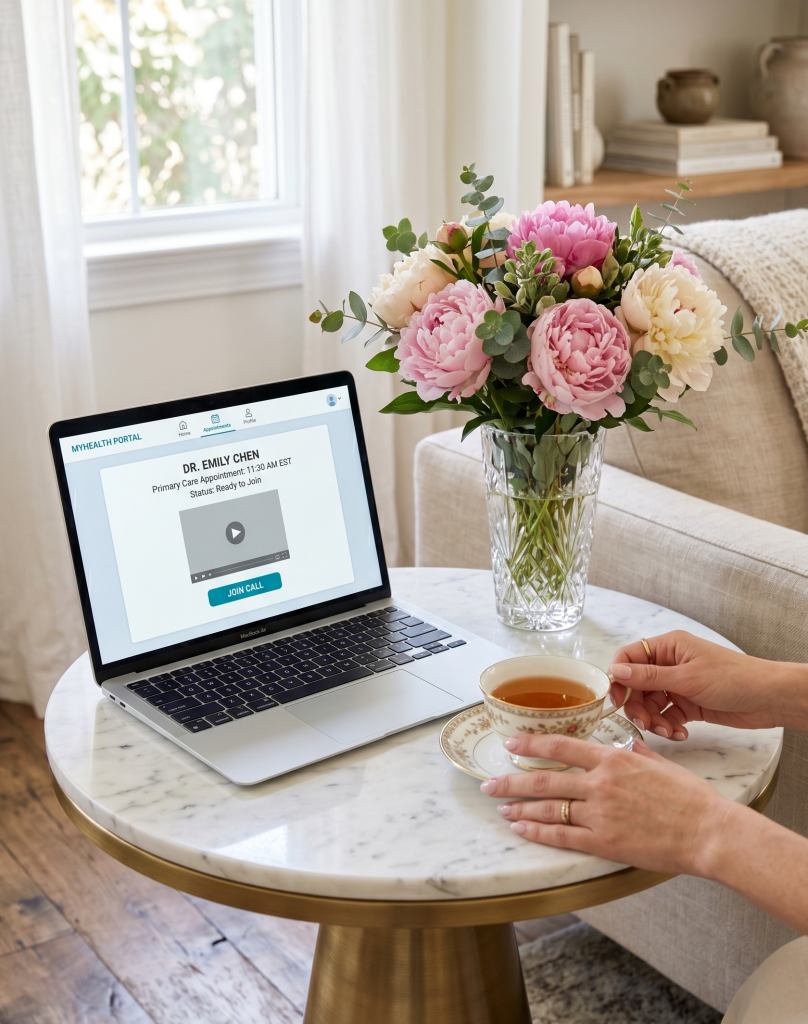
Tea in hand. My own chair. No one watching me walk down a corridor. I can ask the questions I actually have. I can take notes without feeling like I’m holding things up. I can ask the doctor to repeat something without feeling like I’ve used up my eleven minutes.
It’s not magic. It’s just that the environment matters more than I gave it credit for. Most of medicine is conversation. And conversation works better when nobody feels small.
I also keep a list now. Things I want to ask between appointments. In the old days I’d forget half of it by the time I was sitting in the waiting room. Now the list lives on my counter, and I cross items off the day of my appointment from my own kitchen. Better questions. Better answers. Better care, frankly.
What I didn’t expect: the follow-up gets easier too
Used to be, if I had a follow-up question two days after an appointment, I’d just swallow it. Calling the office felt like climbing a fence. The phone tree, the messages, the eventual half-answer from someone who wasn’t my doctor.
Now it’s a message. I type. They reply. The friction is just gone. Which sounds like a small thing but, when you’ve been on the high-friction side for years, the absence of friction is almost emotional.
Last month I had a side effect I wasn’t sure about. In my old life I would have waited two weeks for my next appointment, suffered through it, and forgotten to mention it. Instead I sent a message at 9pm. By 9am the next morning I had a real answer and an adjusted plan. That’s a kind of responsiveness I didn’t know I could expect from healthcare.
I’m not against in-person care
I want to be clear about that. There are appointments that need to happen in a room. Hands on, eyes on, the whole thing.
What I’ve learned is that a lot of what I used to drive across town for did not actually need to be a room. It needed to be a conversation. And conversations, it turns out, can happen anywhere I have a wifi signal and a chair I don’t hate.
For GLP-1 specifically — for the routine of dose adjustments, side effect check-ins, prescription renewals — telehealth was, for me, a clear win. Not a ‘maybe a little better.’ A genuinely big quality-of-life difference. If you’re hesitating because it feels less serious than in-person, I’d gently push back on that. It’s not less serious. It’s just less of a production. And for something you have to do every month, every month, every month, the production really does add up.